This vignette uses small synthetic tracks to illustrate the core behaviour of clusterTrack. The examples are kept simple: they are not intended as realistic movement simulations, but as simple cases that isolate how the algorithm responds to spatial separation, temporal ordering, revisitation, and variation in local point density.
The objects inferred by clusterTrack are clusters that are distinct in both space and time.
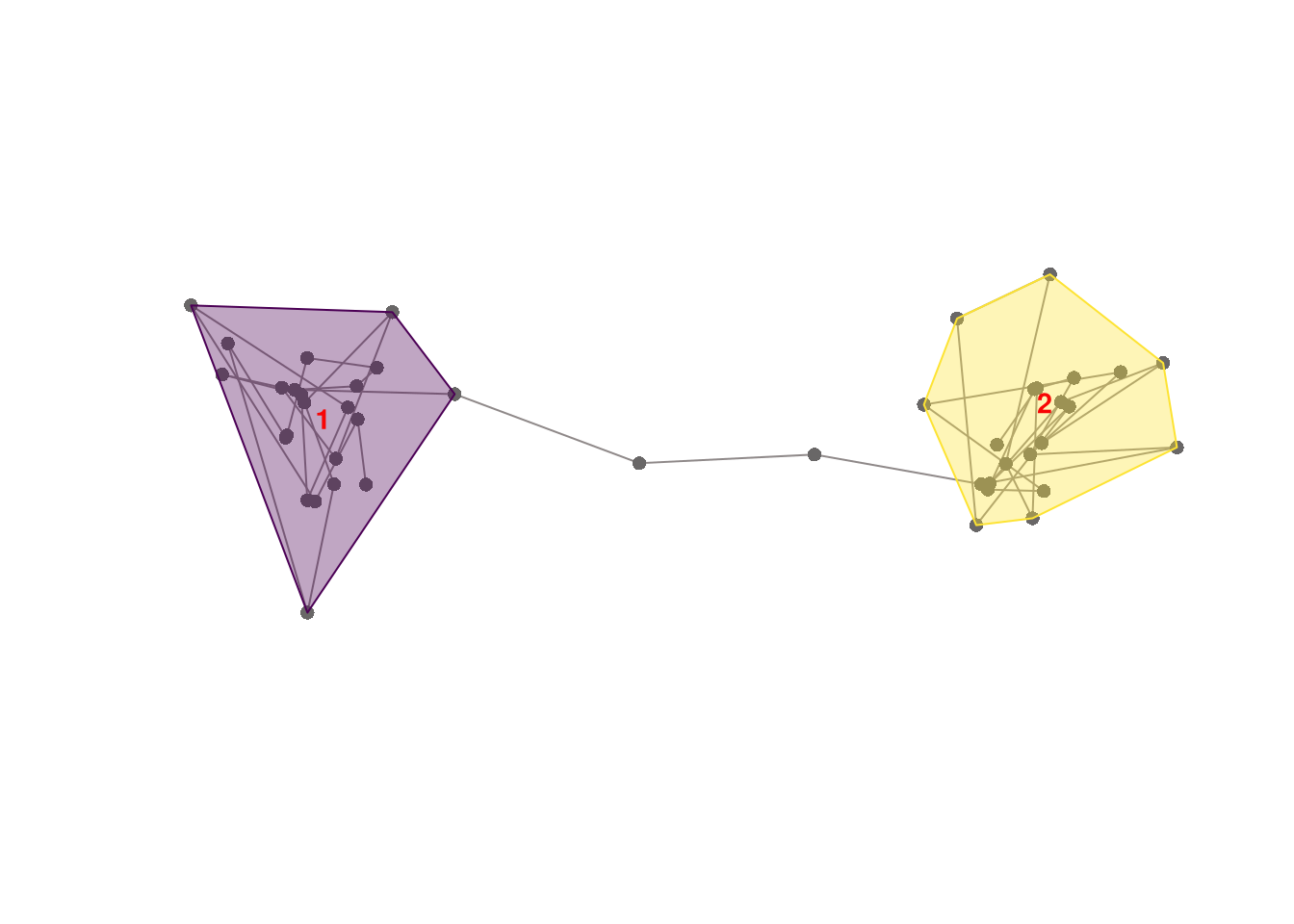
Space and time separation
The simplest case is a track that moves from one concentrated region to another, with the two regions separated both spatially and temporally. Here, spatial discontinuity and temporal ordering provide consistent evidence for two distinct clusters.
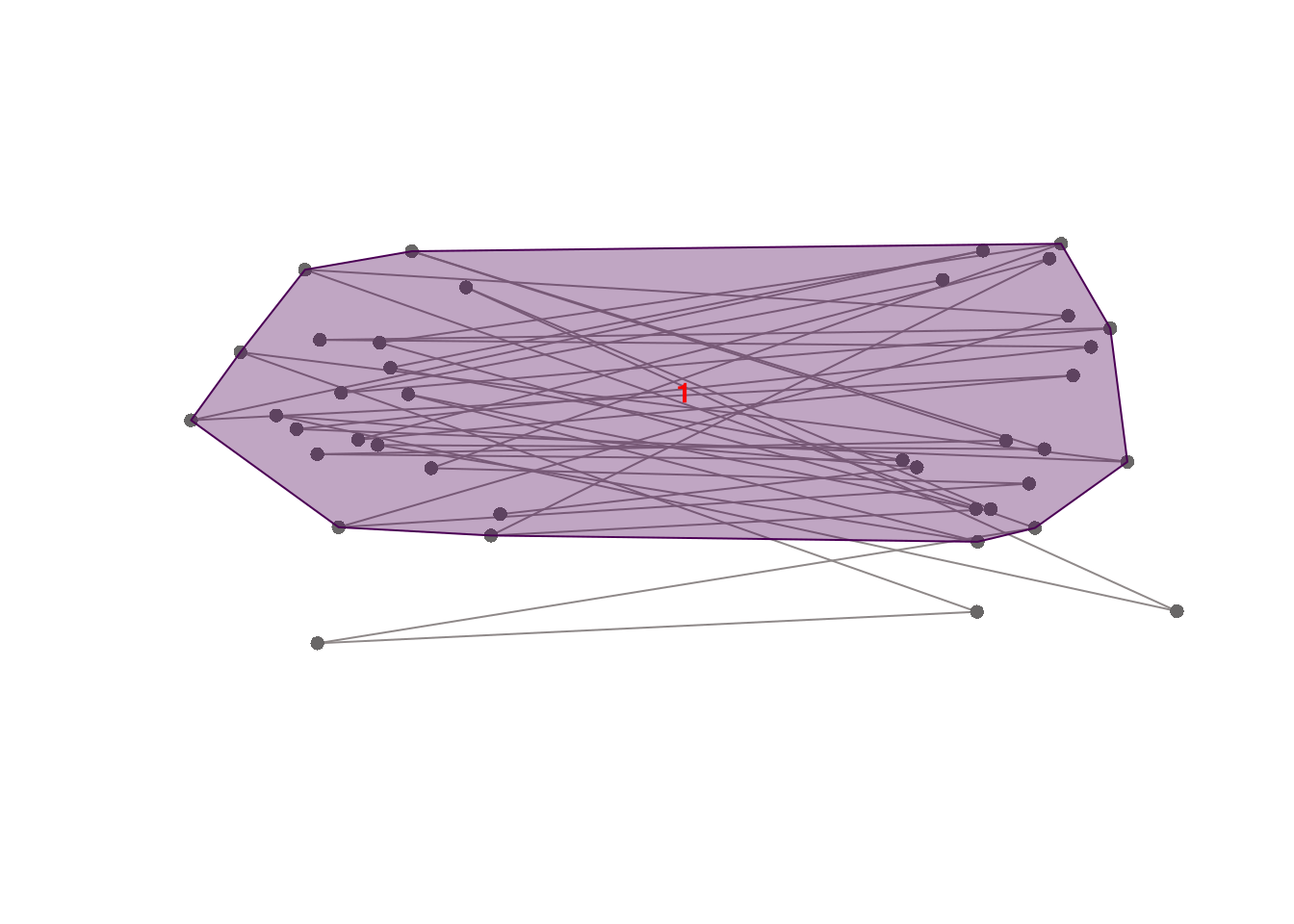
Space separation, time mixing
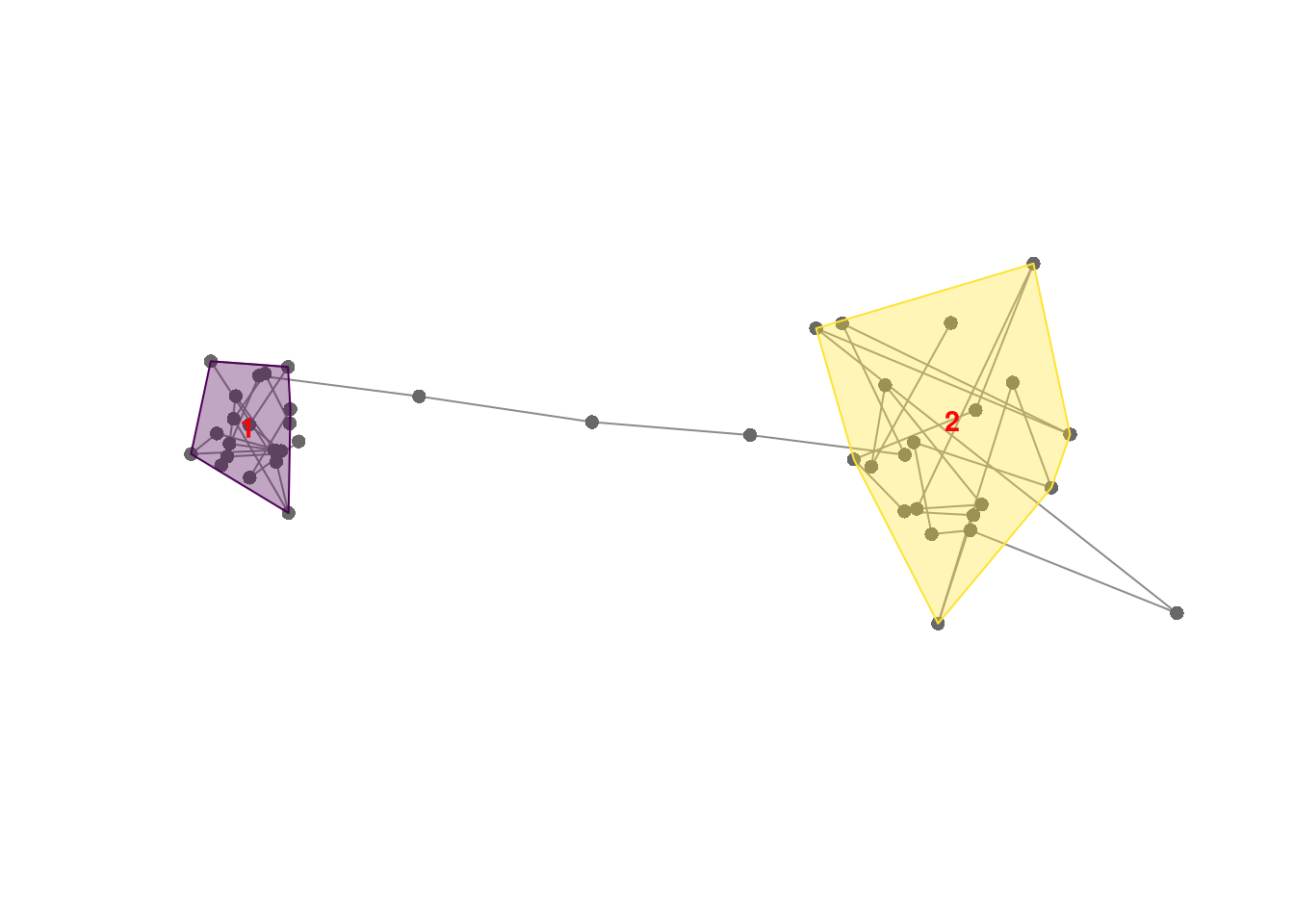
Spatial separation alone is not sufficient to define independent clusters. In this example, two spatially distinct point clouds have overlapping time domains, so they do not represent two temporally ordered parts of the track.
Space recurrence, time separation
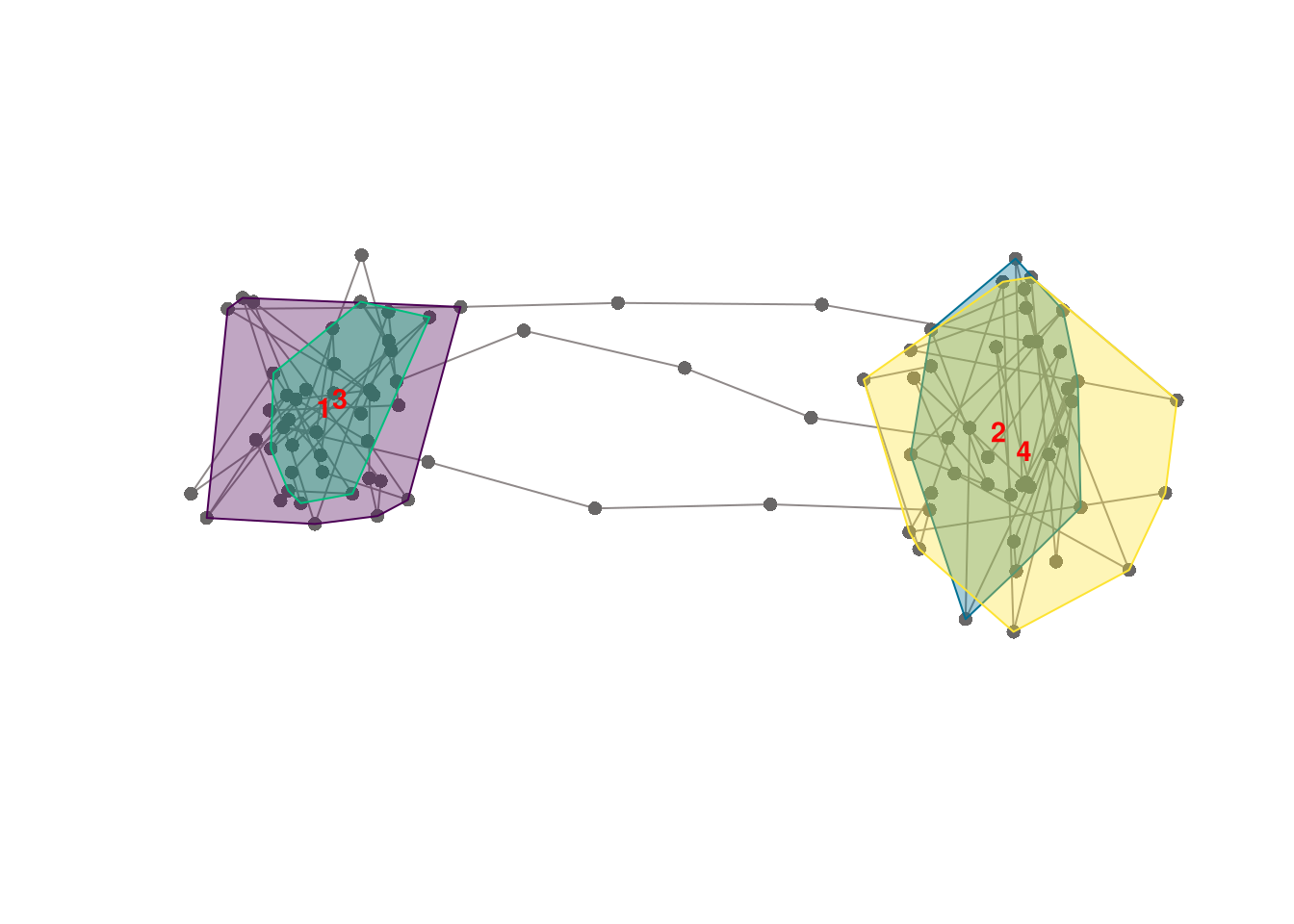
A track can return to the same spatial region after visiting another region in between. These revisits are retained as separate clusters when they are separated in time, even if their spatial footprints overlap.
Clusters with different densities
Because segmentation turns clustering into a local problem, thresholds are estimated locally rather than set globally. This allows clusterTrack to accommodate clusters with different sampling densities.
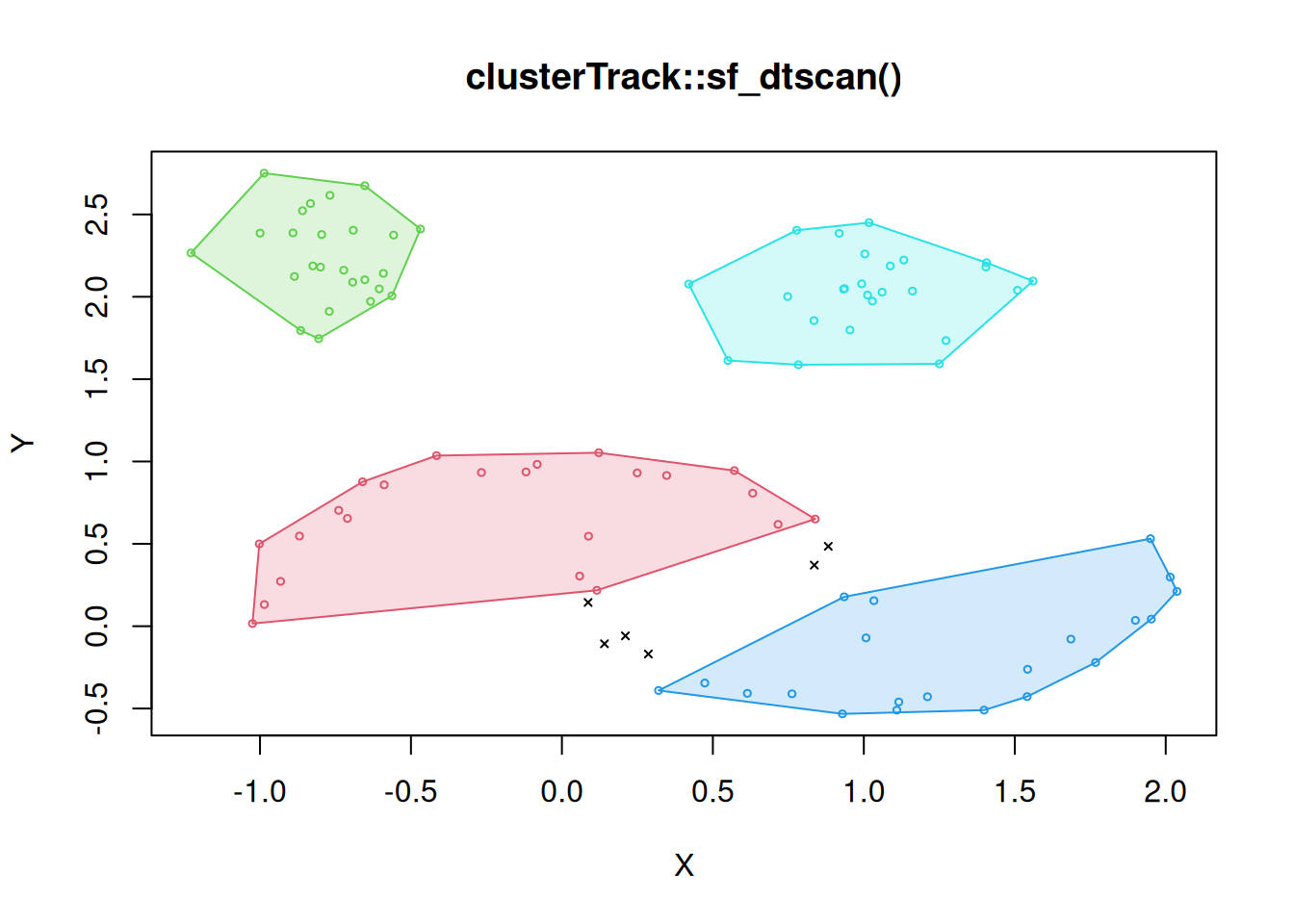
Spatial clustering with sf_dtscan()
clusterTrack uses Delaunay-based spatial clustering internally, but the spatial clustering step can also be run directly with sf_dtscan(). This is useful when the goal is to cluster some data without using temporal information, or when inspecting how the spatial component behaves before applying the full track-level workflow.
The example below uses the moons dataset from dbscan. The dataset was artificially created as two crescent moons and two compact blobs. With the default settings, sf_dtscan() recovers four clusters in this case.